


In his book marking the Jubilee of Brunswick Street church, Bruce W. Rose tells us about the origins of this society in some detail.
The founders were all members of Queen Street Wesleyan chapel They were involved in the Reform movement from 1849 onwards, and began to plan reform within Queen Street in 1851. They were very much opposed to clerical control of their chapel, and finding that they could not come to an agreement with the Wesleyan Methodist church agreed on 4th August 1857 to set up a separate church, to be known as the Free Wesleyan Church.
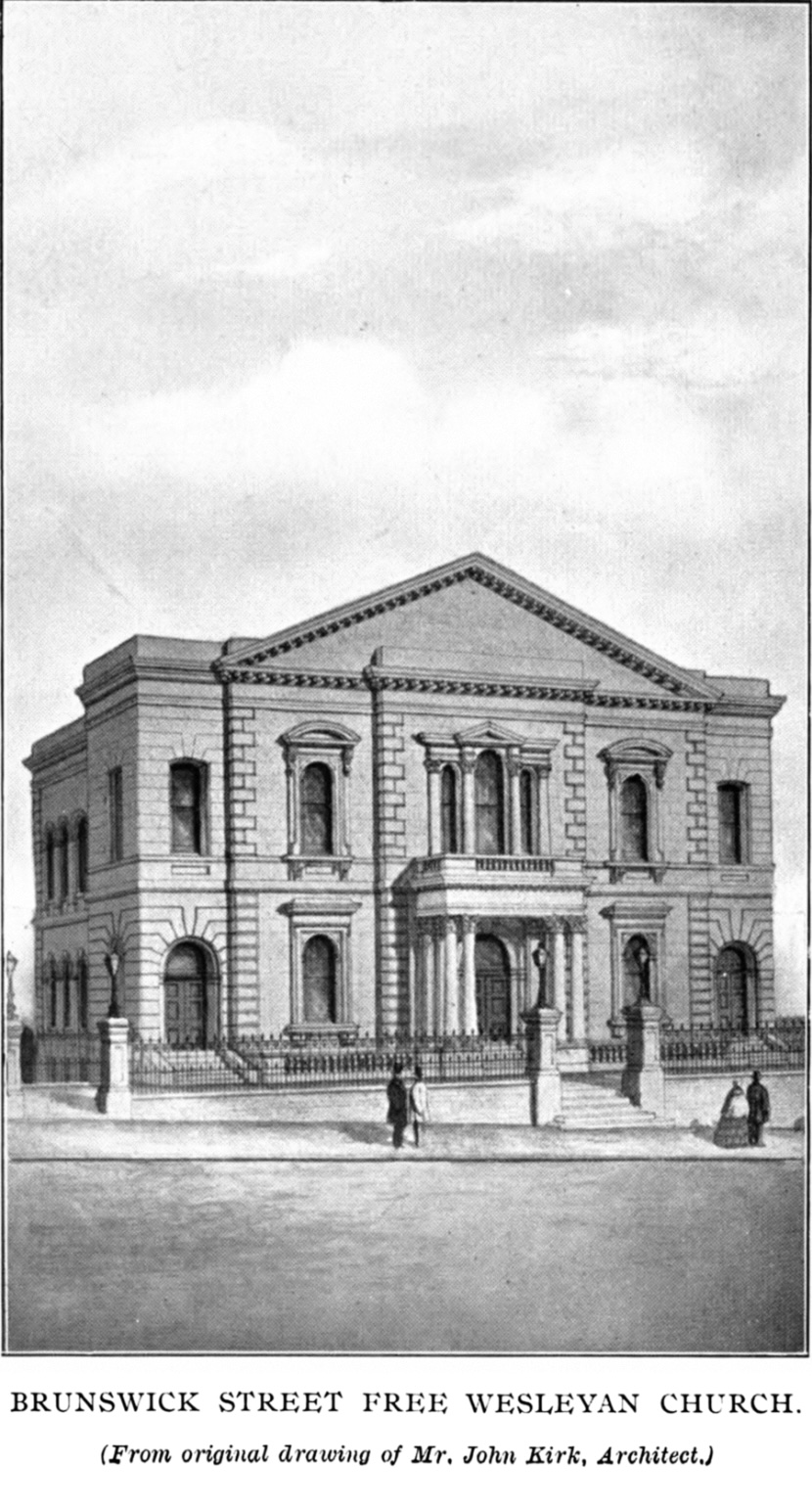
By 1857 they had selected a site for their new church, and accepted the plans of the local architect John Kirk. The foundation stones were laid on 5th April 1858, and the church was opened for worship on 5th September 1859.
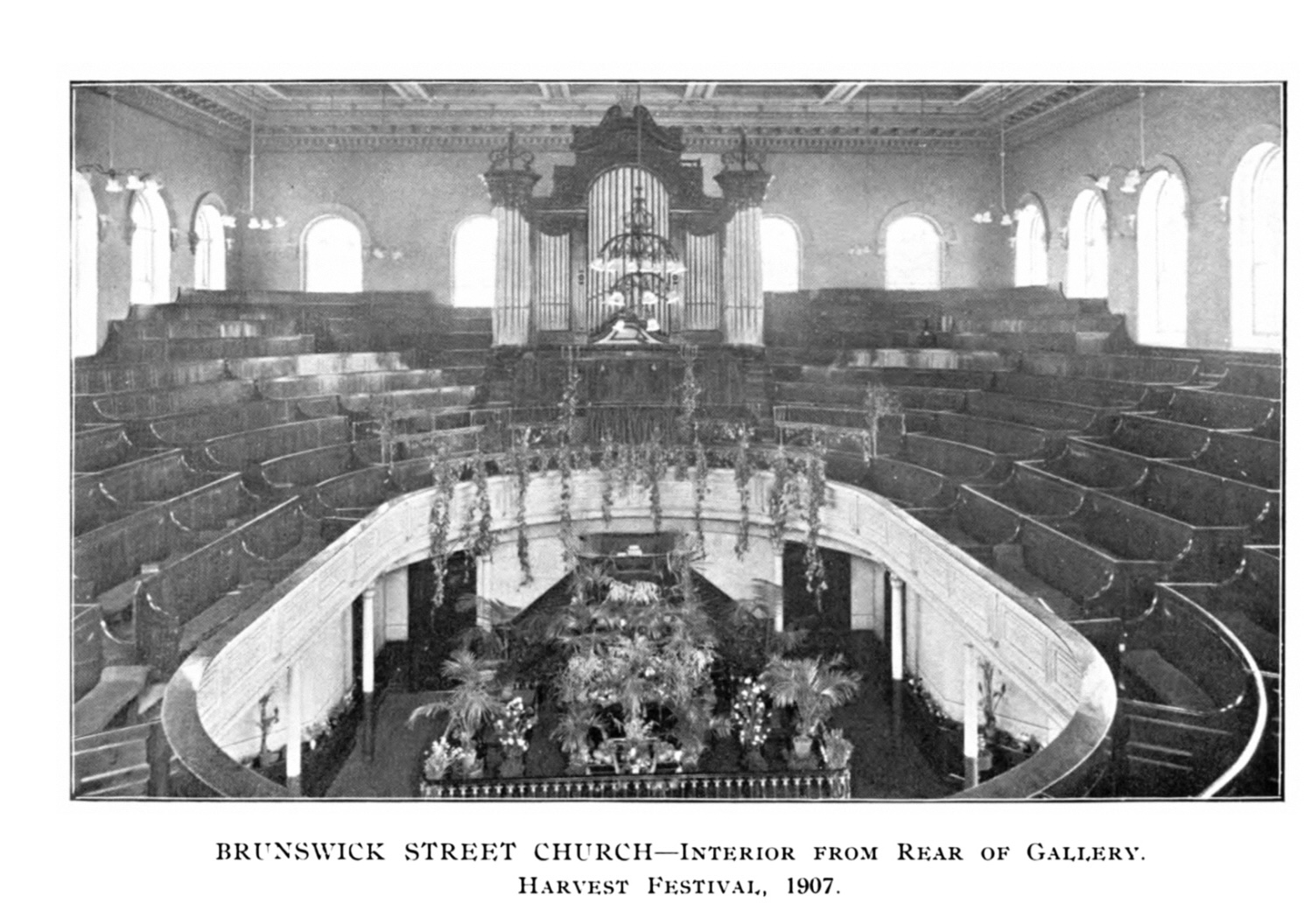
The new building could seat 1150, and had cost them 6000 guineas, which is a not insubstantial sum as they would say in Yorkshire. A year later, in 1860, they spent anoer £700 on an organ.
The new church had 300 members, and a Subday School of between 500 to 600. Bruce Rose notes that on average the society had 358 members during the first fity years of its life.
Due to their belief on the priesthood of all believers, and that all members were capable of running the church they were an independent society of Free Wesleyans. Their first Pastor Rev. James Collier had been a Wesleyan minister, but left over the Reform question. They remained totally independent until 1866 when they invited Rev. Marmaduke Miller to be their pastor. He was a minister of the United Methodist Free Churches, and after some negotiation the membership of Brunswick Street agreed to affiliate with that body.
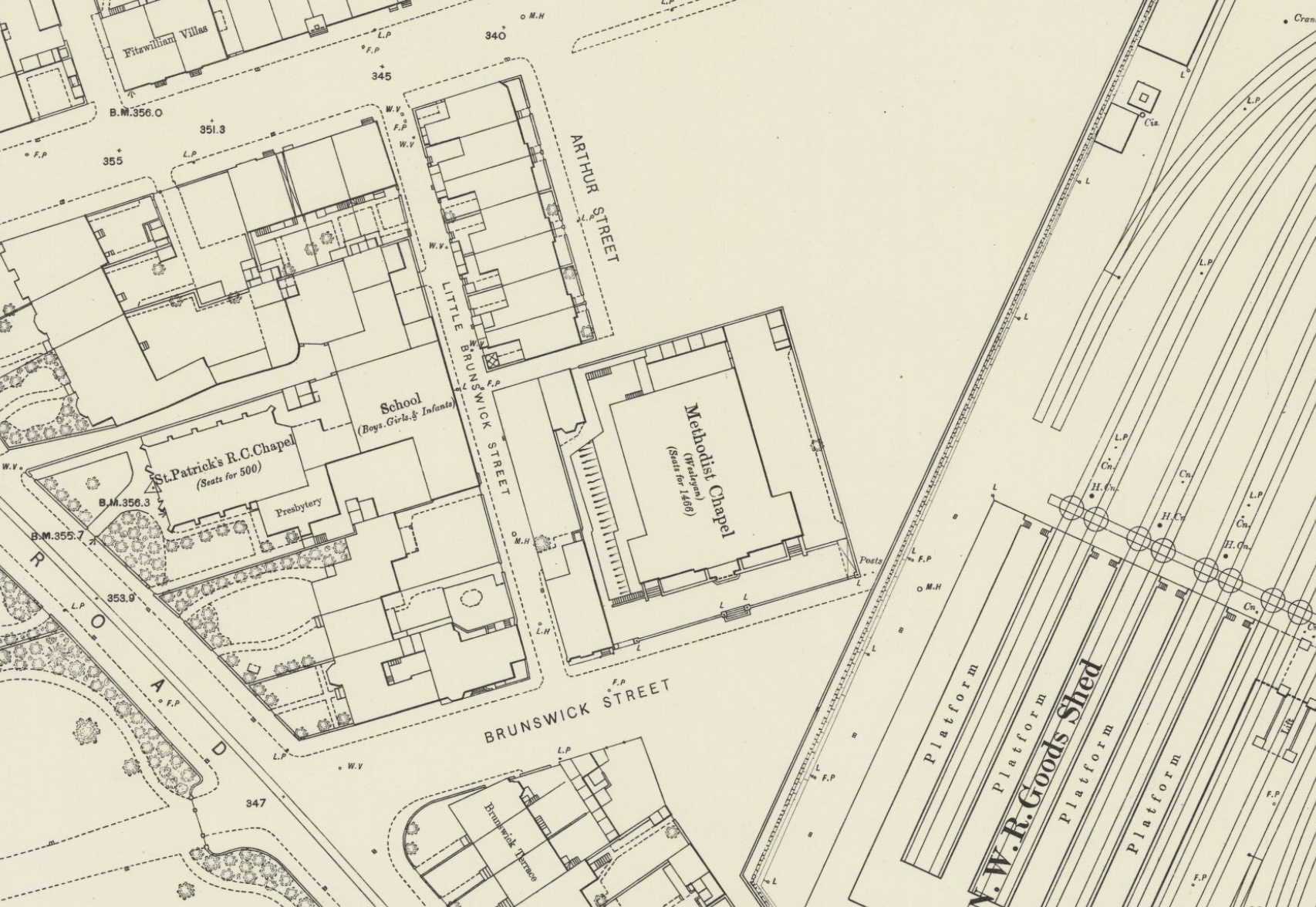
In 1907 Brunswick Street became a United Methodist church, and a Methodist one in 1932. The building closed in 1949, and was demolished to make way for a road in the 1960s.
Sources:
Statistical returns … as at July 1st 1940. Manchester: Methodist Church, Department of Chapel Affairs, 1947
No Comments
Add a comment about this page