


We are fortunate that the story of Brunswick chapel, later church, was told to mark its Diamond Jubilee by Rev. Thomas Pointon Dale.
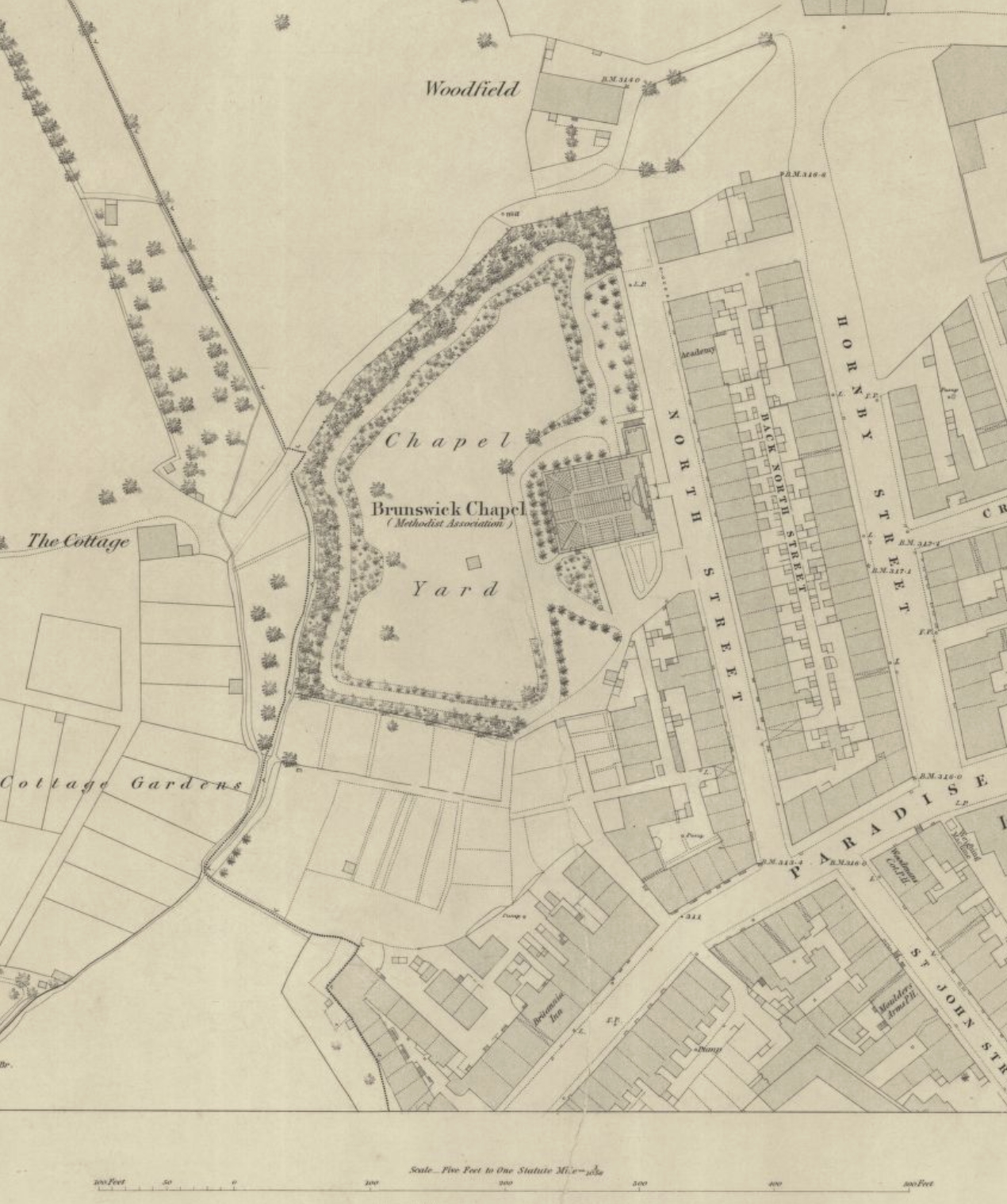
The main cause of the split in Wesleyan Methodism in Bury appears to have been the annexation of Sunday schools by the Wesleyan Methodist Conference. The Sunday school in Bury (and other places) was independent of the chapel, so on May 22nd 1836 the teachers and pupils left the Sunday school in Clerke Street and walked to a new location in a mill in Paradise Street. The same building provided space for Sunday worship and the congregation soon joined the Wesleyan Methodist Association. (Paradise Street is shown towards the bottom of the map: the warehouse being on the next sheet to the right). By May 27th 1836 they were laying the foundation stones of a new chapel, Brunswick, in North Street.
At this early stage the Association raised funding by issuing shares: 1313 and a half £1 shares were sold in the new chapel. The plan was that shareholders would receive dividends, but it soon became obvious that places of worship were not like companies, so the shares were converted into donations.
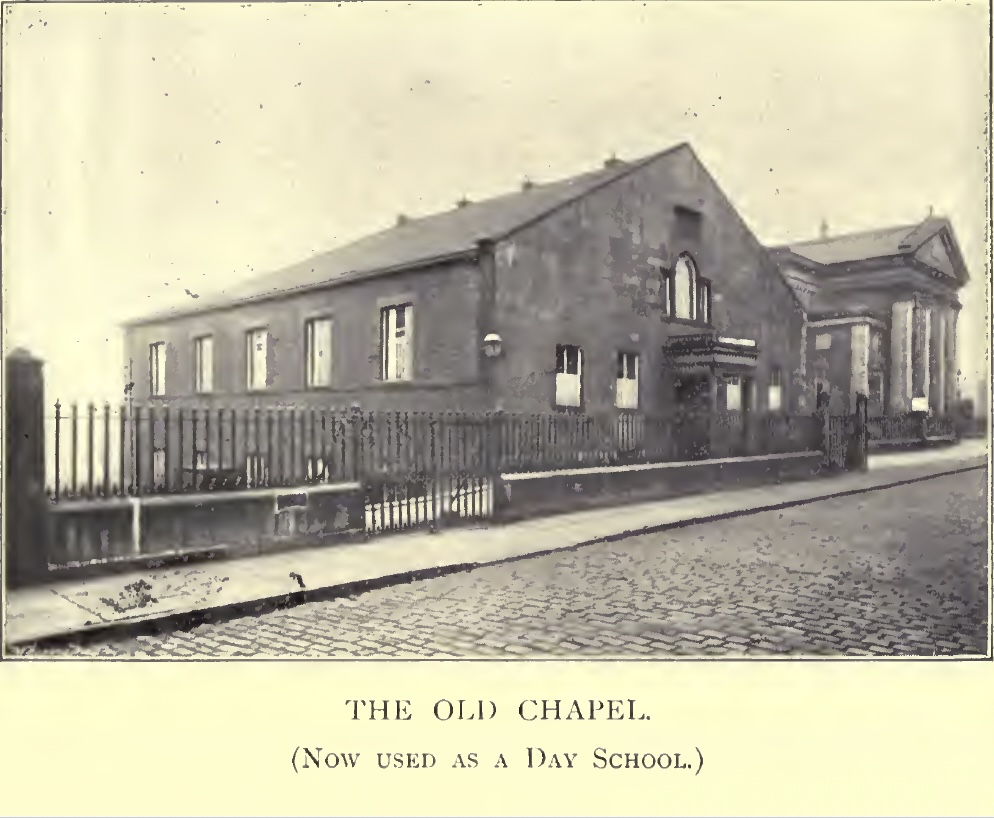
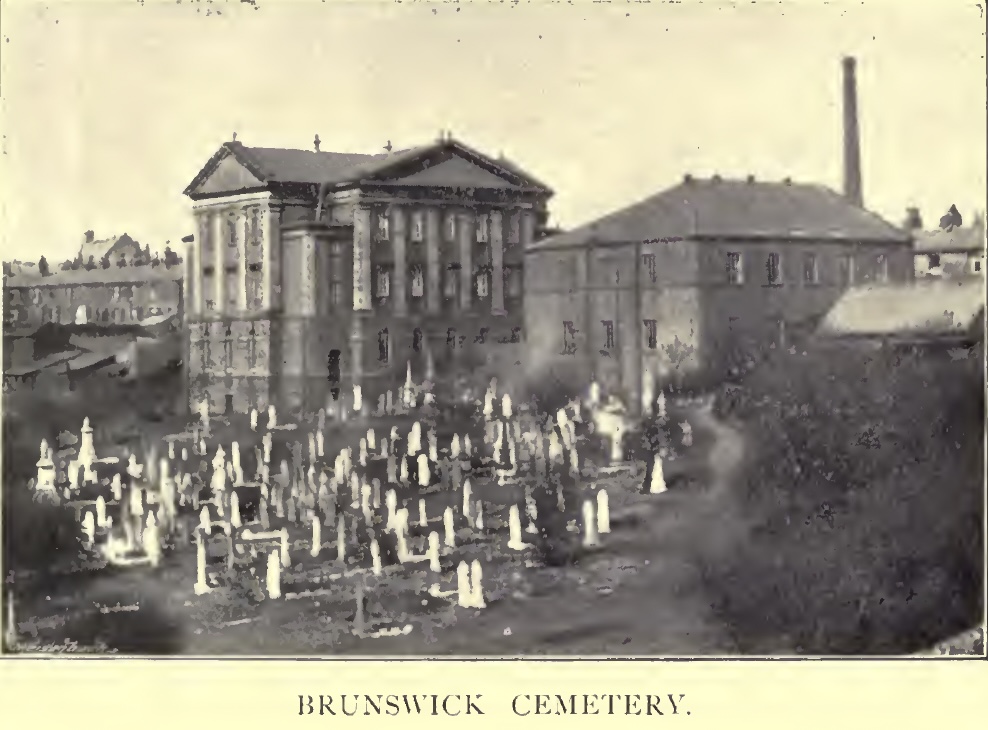
The new chapel was opened on Good Friday and Easter Sunday 1837 (March 24 and 26). As well as a chapel, there was an extensive graveyard.
On March 30th 1851 John Lord, the Steward, reported congregations of 411 in the morning, 60 in the afternoon and 478 in the evening.
By 1862 the society felt that the chapel was becoming too small, and a committee being formed they went about their business very thoroughly, looking at other UMFC chapels which might be a model. They liked the external look of Hanover Chapel in Sheffield, recently built in 1860, although T.P. Dale reports in his history that they thought they could improve on the interior. The new chapel took two years to build and they moved in on 7th December 1864. The 1837 chapel remained in use as a day school.
References
Dale, Thomas Pointon The History of Brunswick church, Bury. Bury: E.W.B. Smith, 1896 pp 210 https://archive.org › details › historyofbrunswi00daleiala
The National Archives HO 129/469/56
No Comments
Add a comment about this page