

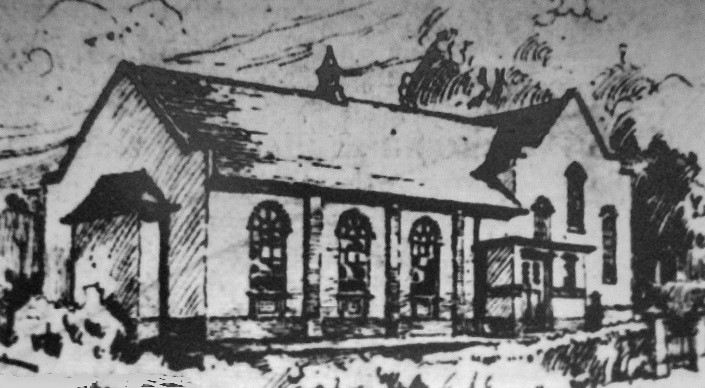
Weston is a village near Spalding. The chapel stood on High Road, next to the vicarage, and was originally opened as Wesleyan in 1844. It had seating for 100.
By 1850, Reformers here were protesting against “Conference despotism”, eventually taking full control of the chapel in 1862. Having secured the building by purchase, they turned their attention to paying off the outstanding debt and received many donations, including one from Sir John Trollope MP.
It would appear that the transition in Weston from one Methodist strand to another went smoothly. One newspaper concluded that “to a man” the secession was agreed.
The temperance movement here was strong. In 1871 a tea was served in the village school to “one hundred reclaimed drunkards”. It was one of the many such initiatives of its time.
Now there happened to be a man by the name of Weston who may have called here. Edward Payson Weston, a celebrated long distance walker, carried out a 5,000 mile walk in the 1880s to raise awareness of temperance. His “teetotal pilgrimage” saw him visit Holbeach and Spalding, and as Weston village is twixt the two he probably walked through it. The Lincolnshire Chronicle (not noted for its puns or humour) called it “an absurd walking feat”, and remarked that “the great temperance walk has not been a pecuniary success”. But was it meant to be?
Grand plans to construct a new chapel were hatched in 1923. Fund raising was set in motion and by 1925 the plans and a drawing were produced by architect Norman Webster of Spalding.
One recollection at the time spoke of “the little chapel … with its beautiful setting of woodland scenery … a cheery smile at the door, and crowded seats for the service … gradually the fire has been rekindled … the spark has been fanned to a flame, and now the old chapel no longer provides sufficient accommodation”.
By 1929 the idea of a new chapel was dropped, and monies raised were used to carry out extensive repairs to the old building. The flame was burning less brightly by the 1960s when, in keeping with the national trend, reduced numbers forced its closure by the end of that decade.
The chapel had, at various times, been a member of four Spalding circuits: Wesleyan; United Methodist Free; United Methodist; and post-union Methodist.
On removing the floorboards during demolition in 1972, workers found a bottle containing souvenirs from the refurbishment of 1883. These included a circuit plan, a poster advertising the re-opening and a hymn sheet used for the special service.
Sources include
Lincolnshire Chronicle 25th September 1883
Free Methodist Manual 1899
Methodist Church Buildings Statistical Returns 1940
Spalding Guardian 16th May 1925 and 14th January 1972
No Comments
Add a comment about this page